A tied T20 is not automatically a draw. Under the ICC Men's T20I Playing Conditions effective October 2026 and the named 2026 competition documents, an eligible tie uses a Super Over: one over per side, ending early when two wickets are lost. A tied Super Over is repeated under the applicable procedure until a winner is found, unless time or other stated conditions prevent completion. ICC and IPL timing provisions differ, so the named competition document controls; this explainer was checked against the provider-hosted source copies on 11 October 2026.
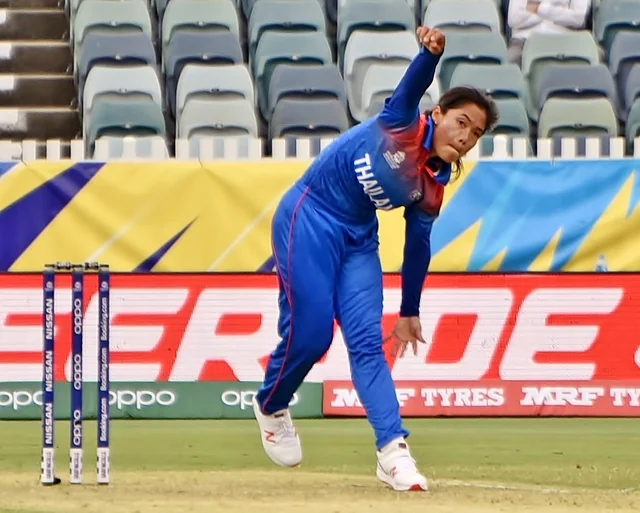
Archival cricket photograph · source and credits
Super Overs in T20 Cricket: What Happens When a Match Is Tied
Under MCC Law 16.5.1, a tie is the result when all innings are complete and the scores are equal. The competition's playing conditions then decide whether a tie-break is used. The ICC Men's T20I Playing Conditions effective October 2026 and the ICC Men's T20 World Cup 2026 conditions send an eligible tied match to a Super Over under their tie clauses. The side with more Super Over runs wins, regardless of wickets lost.
A scorecard can therefore show a tied regulation match while the match record has a winner after the Super Over. The Super Over is a separate competition procedure. If the required procedure cannot be played or completed under the applicable conditions, the match may remain tied. Domestic competitions, other tournament editions, and later amendments can use different provisions.
- ICC Men's T20I Playing Conditions — effective October 2026 (provider-hosted PDF; checked 11 October 2026)https://images.icc-cricket.com/image/upload/prd/bsxcho7ufe2pjban0wjp.pdf
- ICC Men’s T20 World Cup 2026 Playing Conditions (provider-hosted PDF; checked 11 October 2026)https://images.icc-cricket.com/image/upload/prd/yyt7m8uh9c1uehrbvuwb.pdf
- MCC Law 16: The Result (law page; checked 11 October 2026)https://lawsofcricket.lords.org/laws-of-cricket/innings-and-results/the-result
What a Super Over actually contains
Each team faces one over of six balls, unless its innings ends earlier. Losing two wickets ends that innings. The team that batted second in the regulation match bats first, without a fresh toss. The fielding side chooses the bowling end.
The fielding restrictions match the last over of an uninterrupted T20. Only nominated match players, including permitted concussion replacements, may take part. Each team gets one unsuccessful review in each Super Over. There is a five-minute interval between the teams’ Super Over innings in the cited ICC and IPL 2026 documents. These details are document-specific, not a universal rule for every competition.
- ICC Men's T20I Playing Conditions — effective October 2026 (provider-hosted PDF; checked 11 October 2026)https://images.icc-cricket.com/image/upload/prd/bsxcho7ufe2pjban0wjp.pdf
- TATA IPL 2026 Match Playing Conditions (provider-hosted PDF; checked 11 October 2026)https://www.iplt20.com/cms/files/jot2qw8s50z1/7DScv8UxUc6AJcrXDon2yW/bdc93c1c438bfafad464f2a334862d59/1775736835406_TATA_IPL_2026_Match_Playing_Conditions.pdf
If the first Super Over is tied
The cited ICC conditions do not use boundary countback to settle a tied Super Over. Another Super Over is played until a winner is found, subject to the applicable exceptional circumstances and timing provisions. The ICC Men’s T20I document allows an unlimited number when needed to determine a result.
Repeat overs are not identical replays. The team that batted second bats first next. Each side reuses its selected ball; the bowling end changes; dismissed batters cannot bat again; and the previous Super Over bowler cannot bowl the next one. The named competition document controls if a later amendment changes those arrangements.
- ICC Men's T20I Playing Conditions — effective October 2026 (provider-hosted PDF; checked 11 October 2026)https://images.icc-cricket.com/image/upload/prd/bsxcho7ufe2pjban0wjp.pdf
- ICC Men’s T20 World Cup 2026 Playing Conditions (provider-hosted PDF; checked 11 October 2026)https://images.icc-cricket.com/image/upload/prd/yyt7m8uh9c1uehrbvuwb.pdf
ICC and IPL rules are similar, but not identical
For an ICC Men's T20I match under the Playing Conditions effective October 2026, or for the ICC Men's T20 World Cup 2026, the first Super Over normally starts five minutes after the tied match. The ICC T20I Appendix F sets the relevant extra-time calculation; its stated calculation includes a 20-minute minimum. Those timings apply only within the named documents and their stated qualifications.
IPL 2026 normally starts its first Super Over 10 minutes after the match. Its tie clause gives subsequent Super Overs a one-hour window from the actual finish of the tied match, with the Match Referee identifying the last start time. That is competition-specific. IPL retains the six-ball, two-wicket format and a five-minute interval between the teams’ Super Over innings.
- ICC Men's T20I Playing Conditions — effective October 2026 (provider-hosted PDF; checked 11 October 2026)https://images.icc-cricket.com/image/upload/prd/bsxcho7ufe2pjban0wjp.pdf
- ICC Men’s T20 World Cup 2026 Playing Conditions (provider-hosted PDF; checked 11 October 2026)https://images.icc-cricket.com/image/upload/prd/yyt7m8uh9c1uehrbvuwb.pdf
- TATA IPL 2026 Match Playing Conditions (provider-hosted PDF; checked 11 October 2026)https://www.iplt20.com/cms/files/jot2qw8s50z1/7DScv8UxUc6AJcrXDon2yW/bdc93c1c438bfafad464f2a334862d59/1775736835406_TATA_IPL_2026_Match_Playing_Conditions.pdf
Worked hypothetical: one Super Over settles it
Hypothetical example: Team Red and Team Blue both score 156. Blue batted second, so Blue bats first in the Super Over and makes 9. Red makes 10 and wins, regardless of wickets lost, because its Super Over score is higher.
There is no new toss: the original chasing side starts. A chase can finish before six balls if the target is passed, while an innings can also end early when two wickets fall.
- ICC Men's T20I Playing Conditions — effective October 2026 (provider-hosted PDF; checked 11 October 2026)https://images.icc-cricket.com/image/upload/prd/bsxcho7ufe2pjban0wjp.pdf
Worked hypothetical: a repeat tie
Hypothetical example: Blue bats first and Red second in the opening Super Over. Both score 8. Red bats first in the next one, the bowling ends switch, the dismissed batter is unavailable, and the previous bowler cannot bowl. If it ties again, those rotation principles continue subject to the applicable time provisions.
A repeat tie therefore means short, independent one-over contests with restrictions on reusing dismissed batters and the previous bowler. This is an explanation of the cited playing conditions, not a report of a real match.
- ICC Men's T20I Playing Conditions — effective October 2026 (provider-hosted PDF; checked 11 October 2026)https://images.icc-cricket.com/image/upload/prd/bsxcho7ufe2pjban0wjp.pdf
- TATA IPL 2026 Match Playing Conditions (provider-hosted PDF; checked 11 October 2026)https://www.iplt20.com/cms/files/jot2qw8s50z1/7DScv8UxUc6AJcrXDon2yW/bdc93c1c438bfafad464f2a334862d59/1775736835406_TATA_IPL_2026_Match_Playing_Conditions.pdf
What viewers should check before judging a tie
First check whether the match was completed or whether a reduced innings used the ICC DLS procedure. Under the ICC Men's T20I Playing Conditions effective October 2026, when clause 16.4.1.1's reduced-match minimum-overs and result-eligibility requirements are met (including the applicable five-over minimum for the reduced second innings), the revised target is a whole number one run above the par score. At the end of that eligible chase, a score equal to par is a tie, a higher score wins, and a lower score loses. Do not treat a live score one run below a target as a tie before the eligible innings ends.
If the named ICC minimum-overs or result-eligibility conditions are not met, the match is a no-result and there is no Super Over. If clause 16.4.1.1 expressly recognizes that a result was already achieved earlier under its stated conditions, record that result instead of applying the end-of-chase tie formula. The applicable competition document controls any different threshold or exception.
Then check the event document. The ICC and IPL documents agree on the core format but differ on timing and exceptional limits. The named competition's playing conditions, including later amendments, are the final authority.
- ICC Men's T20I Playing Conditions — effective October 2026 (provider-hosted PDF; checked 11 October 2026)https://images.icc-cricket.com/image/upload/prd/bsxcho7ufe2pjban0wjp.pdf
- iplt20.com · What viewers should check before judging a tiehttps://www.iplt20.com/playing-conditions
- MCC Law 16: The Result (law page; checked 11 October 2026)https://lawsofcricket.lords.org/laws-of-cricket/innings-and-results/the-result
Questions readers ask
Is a tied T20 automatically a draw?
No. Under the ICC Men's T20I Playing Conditions effective October 2026 and the ICC Men's T20 World Cup 2026 conditions, an eligible tied match goes to a Super Over. It remains tied only if the required Super Over process cannot be played or completed, or if the applicable competition rule says so. Other competitions and later amendments may differ.
How many balls and wickets are allowed in a Super Over?
Each side is scheduled to face six balls. An innings ends earlier if the batting side loses two wickets. The team with more runs wins, regardless of wickets lost, subject to the named competition’s playing conditions.
What happens when two Super Overs are tied?
Under the cited ICC procedures and IPL 2026 procedure, another Super Over is played. The batting order reverses, the bowling end changes, dismissed batters and the previous Super Over bowler are unavailable for the next one, and the selected balls are reused by the same teams. Timing limits and exceptional circumstances can prevent more overs from being completed.