Test cricket gives each side two innings and no fixed over ceiling for an innings; an ODI gives each side one innings of up to 50 overs; a T20I gives each side one innings of up to 20 overs. That changes whether teams can build a result over days, manage a fixed 300-ball allocation, or treat almost every delivery as an immediate tactical decision. The figures below describe the cited ICC men's international conditions; competition rules can vary.
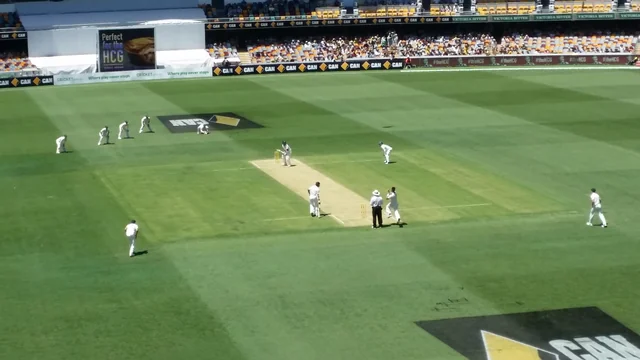
Archival cricket photograph · source and credits
The basic units: innings and overs
An innings is a team’s turn to bat. The MCC Laws allow one or two innings per side, while competition conditions set the format. An over is six valid balls; a wide or no-ball normally does not count among them. After an over, play changes ends, and a bowler cannot deliver two consecutive overs in the same innings.
A score such as 12.4 overs means 12 completed overs and four valid balls, not 12.4 decimal overs. That matters when chasing or when rain changes the overs available.
- MCC Law 13, Inningshttps://lawsofcricket.lords.org/laws-of-cricket/innings-and-results/innings
- MCC Law 17, The Overhttps://lawsofcricket.lords.org/laws-of-cricket/the-over-scoring-runs-dead-ball-and-extras/the-over
- MCC, About the Laws of Crickethttps://www.lords.org/mcc/about-the-laws-of-cricket
Test cricket: two innings and time to adapt
For ICC men's Test series beginning on or after 1 October 2026, the October 2026 playing conditions provide two innings per side, taken alternately unless a follow-on is enforced. A Test is scheduled for five days, with no fixed over ceiling on a normal innings. On days other than the last, the ICC sets a minimum target of 90 overs, or 15 overs per hour, subject to the playing-time provisions; the last day has a separate minimum of 75 overs before final-hour provisions. Ongoing series that began earlier may use previous conditions, so the match's applicable regulations govern.
A captain can declare, except that the final innings cannot be declared under the MCC Law. In a five-day match, a side leading by at least 200 runs after the first innings may ask the other side to bat again. That is the follow-on option, not an automatic result.
Hypothetical example: Team A makes 360 and Team B 140, a lead of 220. Its captain may enforce the follow-on or rest bowlers and wait. The choice illustrates Test tactics: preserve wickets, read conditions and balance victory chances against a possible draw.
- ICC Men’s Test Match Playing Conditions, October 2026https://images.icc-cricket.com/image/upload/prd/a8114zro5tkioifz0jqg.pdf
- MCC Law 15, Declaration and Forfeiturehttps://lawsofcricket.lords.org/laws-of-cricket/innings-and-results/declaration-and-forfeiture
- MCC Law 14, The Follow-onhttps://lawsofcricket.lords.org/laws-of-cricket/innings-and-results/the-follow-on
- ICC, The Three Formats of Crickethttps://www.icc-cricket.com/about/cricket/game-formats/the-three-formats
ODI cricket: a 50-over resource-management game
Under the ICC men's ODI playing conditions issued for October 2026, an ODI is one innings per side, limited to 50 overs in an uninterrupted match. It can finish earlier if the batting side is all out. No bowler may bowl more than 10 overs, so captains must divide the workload and protect options for key moments.
The fielding phases shape the plan: in overs 1–10, no more than two fielders may be outside; in overs 11–40, four; and in overs 41–50, five. A rain interruption can reduce the innings and alter phase treatment. Under the applicable ICC or domestic playing conditions, any Duckworth–Lewis–Stern (DLS) target, revised overs, phase treatment, minimum overs needed for a result, or no-result outcome follows the specified procedure; a shortened ODI is not simply a normal ODI played faster.
Hypothetical example: at 62 for 1 after 10 overs, 40 overs remain and the middle phase permits a different field. Batters can rotate strike and plan acceleration. The question is how to turn 300 valid balls into a competitive total without losing too many wickets early.
- ICC Men’s ODI Playing Conditions, October 2026https://images.icc-cricket.com/image/upload/prd/bxkzkcyvfn6tvi70zh0w.pdf
- ICC, The Three Formats of Crickethttps://www.icc-cricket.com/about/cricket/game-formats/the-three-formats
- icc-cricket.com · ODI cricket: a 50-over resource-management gamehttps://www.icc-cricket.com/about/cricket/rules-and-regulations/playing-conditions
T20I cricket: the shortest format magnifies each decision
Under the ICC men's T20I playing conditions issued for October 2026, each side has one innings of up to 20 overs, unless all out earlier. A bowler may deliver no more than four overs. The Powerplay is the first six overs, when only two fielders may be outside; during the remaining overs, no more than five may be outside. Revised-length matches use the applicable DLS and result procedures, including any minimum-over requirement and other format-specific exceptions; a shortened innings does not automatically produce a result.
Hypothetical example: Team X is 48 for 2 after six overs. Fourteen overs remain and the restrictions have changed. The batting side may promote a hitter; the bowling captain must decide when to spend the best specialist’s quota. There is little time to recover from a quiet over or lost wicket.
- ICC Men’s T20I Playing Conditions, October 2026https://images.icc-cricket.com/image/upload/prd/bsxcho7ufe2pjban0wjp.pdf
- ICC, The Three Formats of Crickethttps://www.icc-cricket.com/about/cricket/game-formats/the-three-formats
- icc-cricket.com · ODI cricket: a 50-over resource-management gamehttps://www.icc-cricket.com/about/cricket/rules-and-regulations/playing-conditions
Why the same skills demand different tactics
The formats reward different kinds of control. Tests demand concentration, partnerships and judgment about when to attack; because a draw is possible, time and survival can matter as much as runs and wickets.
ODIs sit between the two: batters pace three fielding phases and bowlers work within over caps. T20 removes spare time, so batters may seek boundaries earlier while bowlers protect a limited quota. These are tendencies, not promises; conditions, roles and competition regulations still matter.
- ICC, The Three Formats of Crickethttps://www.icc-cricket.com/about/cricket/game-formats/the-three-formats
- ICC Men’s Test Match Playing Conditions, October 2026https://images.icc-cricket.com/image/upload/prd/a8114zro5tkioifz0jqg.pdf
- ICC Men’s ODI Playing Conditions, October 2026https://images.icc-cricket.com/image/upload/prd/bxkzkcyvfn6tvi70zh0w.pdf
- ICC Men’s T20I Playing Conditions, October 2026https://images.icc-cricket.com/image/upload/prd/bsxcho7ufe2pjban0wjp.pdf
Do league and domestic rules always match ICC rules?
No. MCC writes and interprets the Laws, but competitions add playing conditions. The ICC documents effective for the relevant international series govern the figures above; domestic and league competitions can differ. BCCI publishes its own documents, and the IPL has separate Match Playing Conditions, which may amend interruption, substitute, fielding, over-rate or tie-break procedures.
For a live match, read that competition’s conditions effective for the relevant competition and date. Identify the format, check whether the innings was shortened, and look for any local change to the field, bowling or result calculation. The ICC figures above come from the October 2026 men's international playing conditions; ongoing series that began before 1 October 2026 and domestic or league competitions may follow different conditions.
- MCC, About the Laws of Crickethttps://www.lords.org/mcc/about-the-laws-of-cricket
- icc-cricket.com · ODI cricket: a 50-over resource-management gamehttps://www.icc-cricket.com/about/cricket/rules-and-regulations/playing-conditions
- BCCI Playing Conditionshttps://www.bcci.tv/playing-condition
- IPL Match Playing Conditionshttps://www.iplt20.com/playing-conditions
Questions readers ask
Is a Test match 90 overs per innings?
No. For ICC men's Test series beginning on or after 1 October 2026, the applicable October 2026 conditions set 90 overs as the minimum daily target on days other than the last, subject to the playing-time provisions. A Test innings has no normal fixed over limit. An ongoing series that began earlier may use previous conditions, so check the match's governing regulations.
Can an ODI team bat for more than 50 overs?
Not in a full, uninterrupted ICC men's ODI. Each side has one innings limited to 50 overs, although an innings can end earlier if the side is all out. An interruption can reduce the scheduled number, and the applicable ICC or domestic playing conditions determine any DLS target, revised overs, phase treatment, minimum overs for a result, or no-result outcome.
Is every T20 innings exactly 20 overs?
No. Twenty overs is the maximum in an uninterrupted ICC men's T20I. An innings ends earlier if the team is all out, and weather or another interruption can produce a revised shorter innings. The applicable playing conditions determine any DLS target and result procedure, including any minimum-over requirement and format-specific exceptions.